If you had asked me a few years ago what a chain whip was, I probably would’ve guessed it was some kind of hardcore dance move. But after a whole lot of trailside mishaps, late-night YouTube rabbit holes, and greasy hands, I’ve come to appreciate the weird and wonderful world of mountain bike tools. And more importantly… what they actually do.
Whether you’re brand new to riding, want to save money doing repairs yourself, or just want to stop relying on your more mechanically inclined friends, this guide breaks down the essential tools every mountain biker should know about.
From the basics you should carry on every ride to the more advanced stuff like bleed kits and cassette removers, I’ll walk you through what each tool does, when you’ll need it, and why it’s worth having in your kit.
Let’s nerd out a little! Your bike (and future self, stranded mid-ride) will thank you.
On-the-Trail Essentials
These are the must-have tools I bring on every ride. They’re compact, lightweight, and can save you from a long, frustrating hike out.
Multi-Tool
Should include Allen keys (2–8mm), Torx wrench (usually T25), screwdrivers, and chainbreaker
Use for quick adjustments to cockpit, brakes, derailleur, etc.
Duct or Gorilla tape – patch tires or hold parts together
Tire boot – covers sidewall tears (a folded dollar bill works too)
At-Home Maintenance Tools
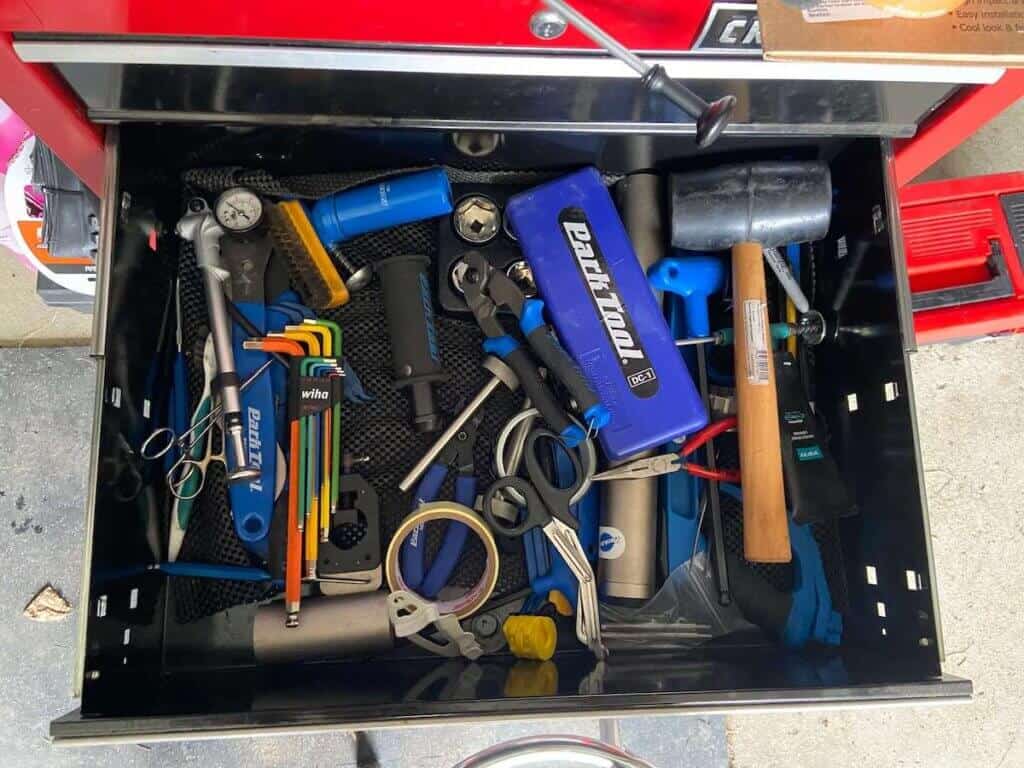
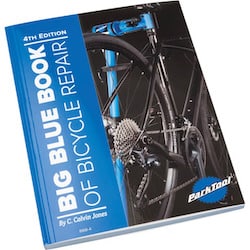
Once I started doing basic bike maintenance at home, I realized two things: 1) It’s really satisfying, and 2) I needed a few more tools than I thought. Here’s a list of the go-to gear I keep in my bike workspace — from the essentials to the more advanced stuff — plus one book that taught me a ton.
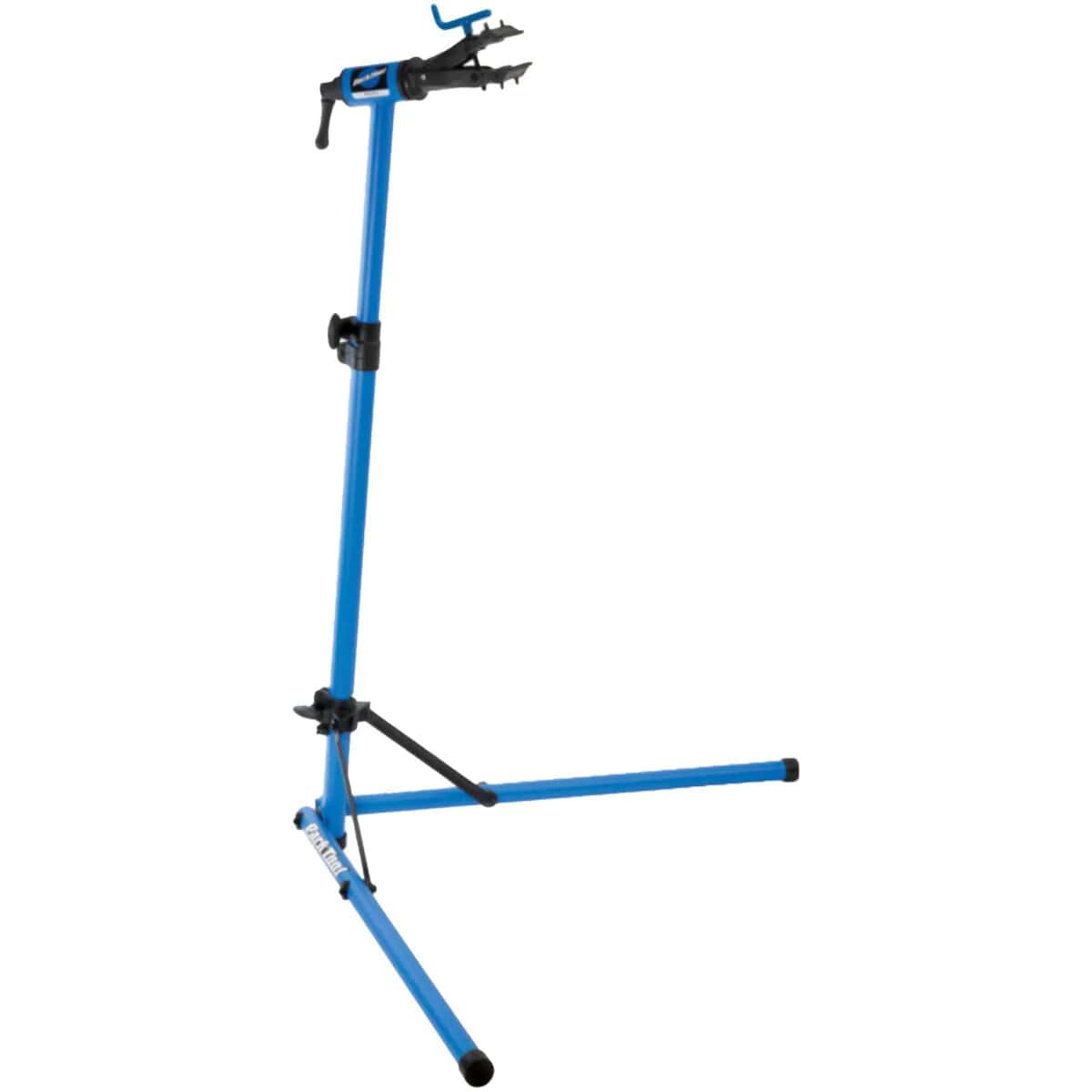
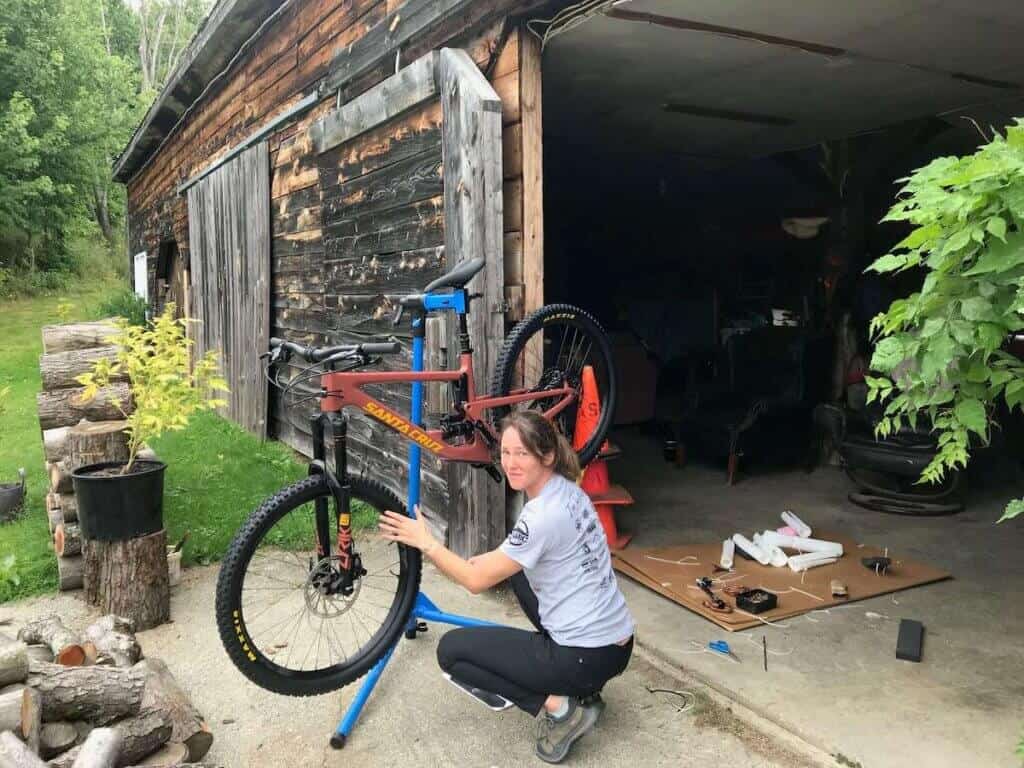
Bike Repair Stand
Game changer for doing anything beyond a quick clean
Holds your bike steady and elevates it to a comfortable height
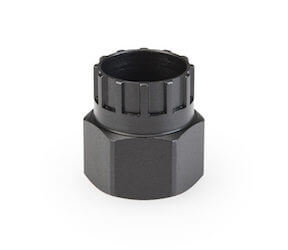
Holds the cassette in place while you loosen the lockring
Essential partner to the lockring toolI like the Park Tool one because it has a built-in wrench that fits some lockrings, so you can install cassettes without needing a separate wrench. Two-in-one tools like that are always a win.
Van life mountain bike maintenance day in Phoenix, Arizona
Drivetrain & Brake-Specific Tools
Once you’ve got the basics down, it’s worth picking up a few more specialized tools to help keep your drivetrain shifting smoothly and your brakes feeling dialed. These tools aren’t necessary for every rider, but if you like to tinker (or just want to avoid trips to the bike shop), they’re good to have around.
Chain Breaker Tool
Lets you remove or install a chain by pushing out the pin
Often included on multi-tools, but a standalone version is easier to use at home
Necessary if you’re replacing your chain or shortening a new one
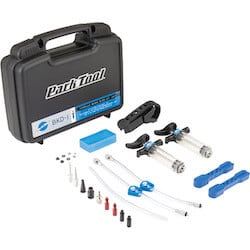
Essential for flushing old brake fluid and removing air bubbles from hydraulic lines
Shimano and SRAM use different systems — make sure you get the right kit
Includes syringes, hoses, fittings, and sometimes mineral oil (Shimano) or DOT fluid (Sram)
A must-have if your brakes feel squishy or inconsistent
Isopropyl Alcohol, Gloves + Clean Cloths
Isopropyl Alcohol: Used to clean brake rotors and pads (especially after bleeds or contamination)
Gloves: Protect your hands from grease and chemicals
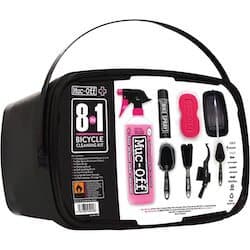
Clean cloths: Keep your work space clean and your bike cleaner
Suspension Tools
Dialing in your suspension can totally change how your bike rides, and having the right tools makes it easier to fine-tune performance or tackle basic service jobs at home. If you’re just starting out, a shock pump is all you really need. But if you’re ready to go deeper, here are the tools that come in handy.
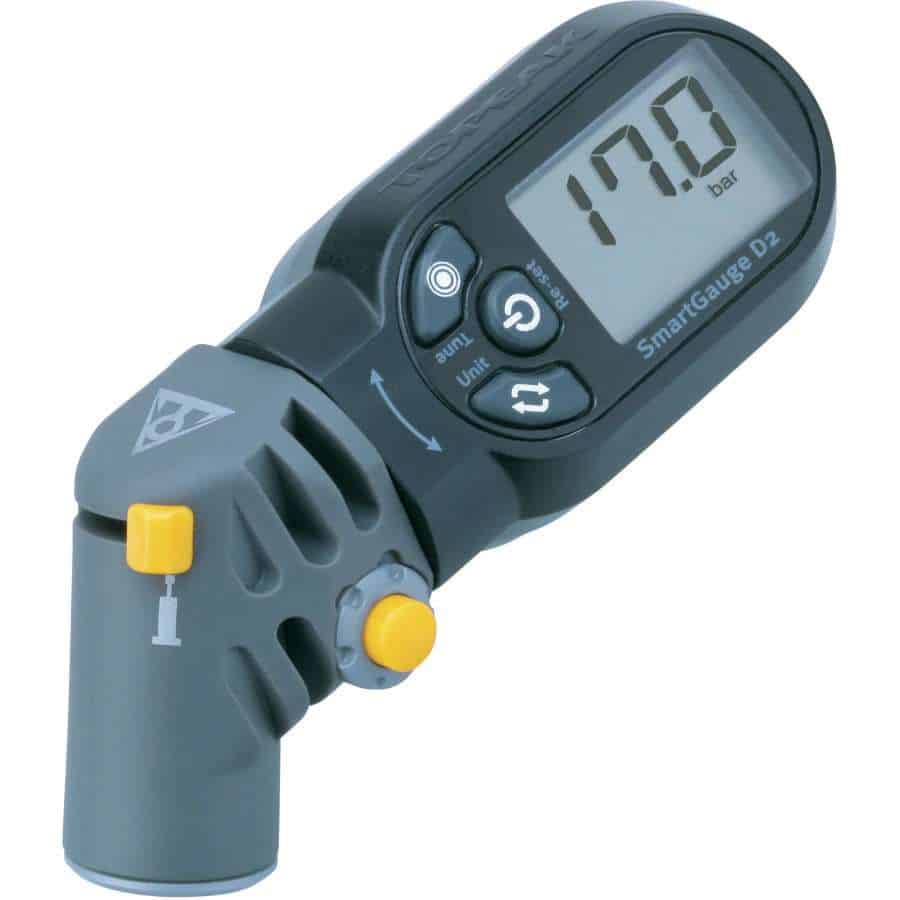
Shock Pump
The #1 must-have suspension tool
Used to set air pressure in your fork and rear shock based on your weight and riding style
Most have a pressure gauge and bleed valve for fine-tuning
Helps you dial in sag and rebound for better ride quality
When I started messing around with tubeless setups and wheel maintenance at home, I quickly realized that having a few key tools made the whole process way less frustrating. This section covers the tools I use in my home setup: the ones that make tire swaps, sealant top-offs, and wheel truing way easier.
I’ve left out basics like tire levers and mini pumps since those are already covered in the On-the-Trail Essentials section. This is more about the shop stuff, the tools that live on the pegboard, not in your pack.
Floor Pump with Pressurized Canister
These are designed to seat tubeless tires by releasing a quick blast of high-volume air
Over the years, I’ve slowly built up my collection of bike tools and honestly, it’s made bikes even more enjoyable. There’s something super satisfying about being able to fix things myself, whether it’s a trailside flat or a messy brake bleed in the garage. You definitely don’t need every tool on this list right away, but having a few basics (and gradually adding the rest) can save you a lot of frustration and a bunch of money on bike shop visits. If there’s a tool you swear by that I didn’t include, I’d love to hear about it. I’m always looking to level up my home setup!
What mountain bike tools did I miss? Which ones do you still need to get? Do you have any advice for new mechanics? Leave a comment!
I'm the creator and founder of the bike blog Two Wheeled Wanderer. I’ve been riding bikes and traveling the world since I was a kid and I like nothing more than enjoying some flowy singletrack or embarking on a multi-day bikepacking adventure. When I'm not blogging, I work on multi-month, cross-continent tours with TDA Global Cycling.
I love hearing from you and appreciate your comments! However, if you leave a rude, unconstructive, or spammy comment, it will be deleted. It’s cool to be kind. Have an awesome day!
Want to know where my two-wheeled travels are taking me? Sign up for my newsletter to get personal updates AND a list of my favorite bike trip planning apps, websites, and more.


















I love hearing from you and appreciate your comments! However, if you leave a rude, unconstructive, or spammy comment, it will be deleted. It’s cool to be kind. Have an awesome day!